
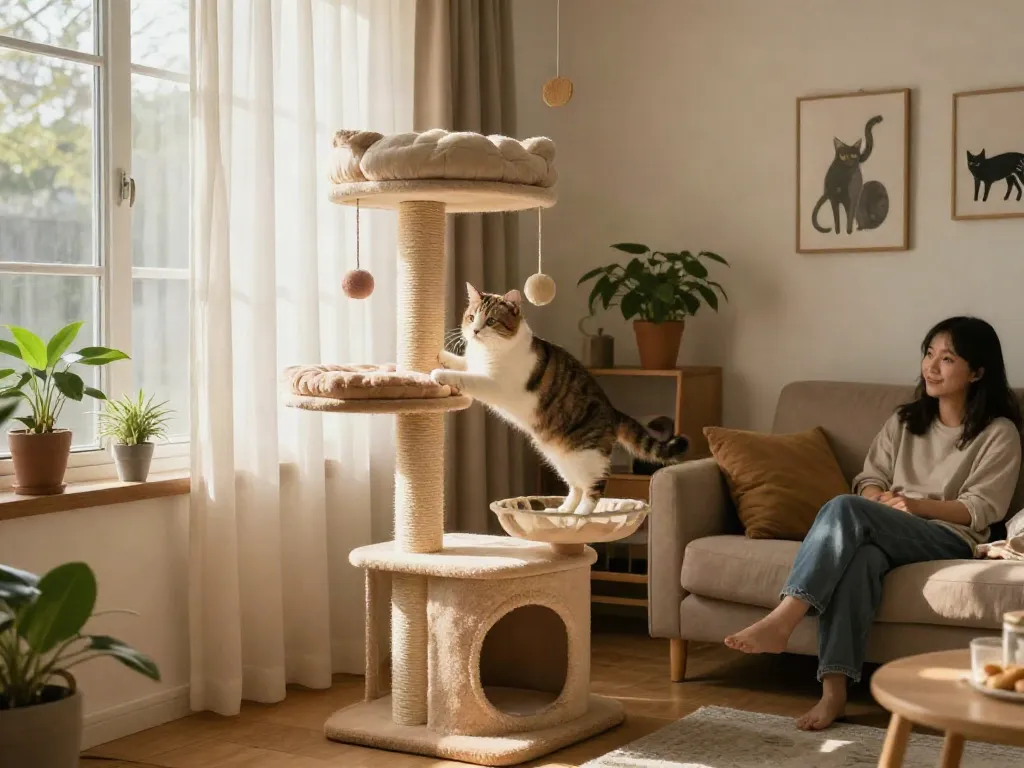
Understanding the Importance of Cat Trees for Pets
Providing a nurturing environment for our feline friends often entails more than just food and shelter. One essential aspect of cat care is ensuring that they have a space to explore, play, and rest—enter the world of cat trees. These structures are specially designed to cater to the natural instincts of cats, promoting their physical and mental wellbeing.
Why Cat Trees are Essential for Cats' Wellbeing?
Cat trees serve as vertical playgrounds for our pets, allowing them to engage in behaviours that are crucial for their health. Climbing, scratching, and hiding are innate behaviours for cats, which they would typically exhibit in the wild. By providing a designated area for these activities, cat trees not only prevent destructive behaviour around the home but also help to alleviate stress and anxiety in cats. A well-placed cat tree can significantly contribute to a cat’s happiness by providing them with a sense of territory and security.
Benefits of Cat Trees for Multi-Cat Houses
In homes with multiple cats, competition for resources can lead to stress and fights. Cat trees can act as individual retreats for each cat, giving them a space to relax and observe without feeling threatened. Many modern designs feature multiple levels and platforms, ensuring that every cat can find their own space. Additionally, different scratching posts and hideaways can help reduce feline conflicts, leading to a more harmonious home environment.
How Cat Trees Promote Natural Behaviours?
Cats are natural climbers and hunters, and a well-designed cat tree caters to these instincts. Elevated platforms allow them to observe their environment from a safe height, while scratching posts help maintain their claws and mark their territory. Moreover, cat trees often include toys that simulate prey, encouraging play and exercise. This engagement not only combusts pent-up energy but also promotes physical fitness, crucial for preventing obesity and related health issues.
Factors to Consider When Selecting Cat Trees
Choosing the right cat tree involves more than just picking an appealing design. Several factors contribute to creating a suitable environment for your pet. Understanding these elements can make a significant difference in your cat's happiness and wellbeing.
Size and Space Requirements for Cat Trees
Before purchasing a cat tree, it’s important to assess the available space in your home. A large, multi-level structure may be perfect for a spacious living area, but it could overwhelm a smaller flat. Consider how many cats will use the tree and choose a size that allows them enough room to climb and explore without overcrowding. Additionally, think about the height; taller trees may be ideal for large houses, while shorter models may be more suitable for compact living.
Materials and Durability Considerations
Cat trees can vary significantly in terms of materials. Look for a structure made from high-quality, durable materials such as solid wood or high-grade MDF. Additionally, the fabric covering of the platforms should be robust enough to withstand scratches and the wear and tear associated with active climbing and playing. Pay attention to the stability of the base—a well-constructed tree will prevent tipping, ensuring your cat’s safety.
Design Features: What Cats Love Most?
When selecting a cat tree, consider which features your cat prefers. Some cats love high perches and enclosed spaces, while others may prefer open platforms to stretch out. Look for unique designs that cater to different behaviours—for example, trees with hanging toys, sisal rope for scratching, or padded resting areas. The more a cat tree reflects your pet's preferences, the more likely your cat will engage with it.
Types of Cat Trees Available in 2026
The variety of cat trees on the market has expanded considerably over the years, with options ranging from traditional designs to innovative modern creations. Understanding the types available can help you make an informed choice.
Modern vs. Traditional Cat Trees: Which Is Best?
Modern cat trees often feature sleek, minimalist designs that fit seamlessly into contemporary décor, while traditional styles boast plush fabrics and elaborate structures. The choice ultimately depends on your home's aesthetic and your cat's play style. For example, a traditional tree may offer more climbing and scratching options, while a modern design might focus on elegance and space-saving capabilities.
Indoor vs. Outdoor Cat Trees: Pros and Cons
Indoor cat trees provide safe spaces for cats to play and relax without the risks associated with outdoor environments, such as predators or traffic. However, outdoor cat trees can let cats experience the natural environment, with fresh air and sunlight. It’s essential to consider factors like safety, the cat’s comfort level, and possible weather impacts when deciding between indoor and outdoor options.
Customizable Cat Trees: Tailoring to Your Cat's Needs
Many companies now offer customizable cat trees that allow you to tailor the structure to your cat's personality and lifestyle. You can select the height, the number of levels, and additional features such as scratching posts or hiding spots. A customizable cat tree not only caters to your feline friend's needs but also ensures it harmonises well with your living space.
Installation and Maintenance Tips for Cat Trees
Once you’ve selected the perfect cat tree, proper installation and ongoing maintenance are vital for its longevity and usability. Here are some tips to help ensure your cat tree stands the test of time.
Setting Up Your Cat Tree Correctly
Before introducing your cat to their new tree, ensure it is assembled correctly according to the manufacturer's guidelines. Place it in a location that allows your cat to observe its surroundings—a sunny spot near the window might be perfect. Moreover, have a stable base; the tree should be secured against walls if needed to prevent tipping, especially in homes with playful or energetic cats.
Regular Maintenance for Longevity and Safety
Regular maintenance checks are essential for ensuring that your cat tree remains safe and enjoyable. Check for loose screws or unstable components regularly and tighten or replace them as needed. Clean the surfaces to remove cat hair and debris, and periodically check the scratching posts for wear. A well-maintained cat tree will not only last longer but will also be safer for your pet.
How to Train Cats to Use Their New Cat Tree?
Some cats may be hesitant to approach a new cat tree, so gentle training can help. Start by encouraging your cat to explore the tree with treats or toys, showing them it is a safe space. Reward them for climbing or using the scratching posts to foster positive associations. Over time, most cats will learn to love their new playground and utilise it to its fullest potential.
Future Trends in Cat Tree Designs and Features
The cat tree industry continues to evolve, with designers constantly innovating to meet the changing needs of cats and their owners. Here are some anticipated trends for 2026.
Innovative Technologies in Cat Trees
Smart cat trees equipped with technology are likely to become more common, potentially featuring sensors that track a cat’s activity or even interactive elements that engage your cat when you’re not home. These advancements could revolutionise how cats interact with their furniture, keeping them stimulated and reducing boredom while owners are away.
Sustainable Materials and Eco-Friendly Designs
As sustainability becomes increasingly important, many manufacturers are beginning to incorporate eco-friendly materials into their cat trees. These might include bamboo, recycled fabrics, and non-toxic adhesives. Choosing sustainable products not only helps the environment but also ensures that your pet's furnishings are safe and toxin-free.
Predictions for Cat Tree Trends by 2026
In the coming years, we can expect to see a greater emphasis on multifunctional designs. Cat trees that combine climbing surfaces, scratching areas, and sleeping spaces into an all-in-one unit will become more popular. Additionally, aesthetic designs that blend seamlessly with home décor will continue to rise in demand, creating stylish yet functional furniture for both cats and their owners.
What is the best brand of cat tree?
The best brand of cat tree often depends on your specific needs, such as size, materials, and design preferences. Researching reviews and recommendations can provide insights into reputable brands that align with your priorities.
Are cat trees good for cats?
Absolutely! Cat trees are excellent for providing mental stimulation, physical exercise, and a sense of security, catering to a cat's natural behaviours and instincts.
Does Costco sell cat trees?
Yes, Costco typically offers a selection of cat trees among their pet supplies, featuring various designs suited for different cat sizes and needs.
What can I use instead of a cat tree?
If you’re unable to invest in a cat tree, alternatives include cardboard boxes, shelves, or DIY structures that encourage climbing and scratching. Ensuring these alternatives are safe and stable is key.
How to choose the right cat tree for your home?
Selecting the right cat tree entails considering your cat's size, behaviour, and your living space. Assess what features are most beneficial to your pet, and look for a design that complements your home while providing a stimulating environment.